
The craft

What you are actually paying for.

You do not need to know any of this to book a photographer — that is rather the point of hiring one. But if you like knowing how things work, here is the job with the lid off, numbers included.

01 · Light

A mandap is lit by four different suns at once

And they disagree about what colour white is.

The pandal bulbs burn orange, around 3000 kelvin. The videographer’s LED panel is daylight, around 5600. The street lamp leaking in through the entrance is sodium, close to 2000 and barely a colour at all. And if there is a gap in the shamiana, actual daylight comes through it at something else again.

One white balance setting cannot serve four sources. So you choose: match your own light to the room and let the room be warm, or overpower the room and let it go cold behind you. Both are decisions. What you must not do is leave it to the camera, which will average all four and make everybody look faintly green.

This is also why we shoot raw. White balance then stops being a mistake you made at 8pm and becomes a decision made calmly afterwards, with the bride’s actual lehenga colour to check against.
02 · Shutter speed

The garland does not wait for your settings

Varmala takes about four hundred milliseconds. You get one.

At 1/125 of a second the flowers smear and the hands blur. At 1/500 the garland freezes mid-air with every marigold separate. That single stop-and-a-bit is the difference between a photograph the family frames and one they scroll past.

The floor is the reciprocal rule: hand-held, keep the shutter at least 1 over the focal length. A 200mm lens wants 1/200 before stabilisation is doing anything for you, and stabilisation steadies the camera — it does nothing at all about a groom who is moving.

Buying that speed indoors costs you something. Wider aperture, higher ISO, or your own light. There is no fourth option, and pretending otherwise is how people come home with a blurred varmala.

03 · Aperture

f/1.2 is a beautiful way to photograph half a couple

Everyone asks for the blurry background. Not everyone wants what it costs.

An 85mm lens at f/1.2, focused three metres away, holds about four centimetres in focus. A bride and groom are almost never in the same four centimetres. You get her eyelashes perfect and his nose already going soft — and nobody looking at that photograph can say why it feels wrong, only that it does.

Two people standing together want roughly f/2.8 to f/4. A row of six at the reception wants f/5.6. Thirty relatives arranged on the stage want f/8 and light of your own, because at f/8 in a dark hall you are not getting there on ambient.

The background still goes soft at f/4 — separation comes from distance and focal length as much as from aperture. Stand the couple further from the wall and the wall disappears anyway.

04 · ISO

Grain is a texture. Blur is a missing photograph

One of these can be fixed later. The other cannot.

There is a habit of treating high ISO as a failure of nerve. It is not. A sharp, slightly grainy frame of the moment somebody’s mother started crying is worth incalculably more than a clean, smooth photograph of the place where that moment used to be.

Sensors have moved on. ISO 6400 is a working number now, not an emergency, and grain at 6400 is finer than the grain everybody happily paid for on film. How much noise reduction to apply is a decision made afterwards, on a big screen, with the print size known.

The order of priorities inside a dark mandap is: get the moment, keep it sharp, then worry about how clean it is. In that order, every time.

05 · Focus

Focus on the eye, and take your thumb off the shutter

Continuous autofocus, back-button, and one point where it matters.

Candid work runs in continuous autofocus with eye detection, because the subject is walking, turning and being hugged by an aunt. Single-shot focus locks once and then politely watches the subject leave it.

Back-button focus separates focusing from the shutter release: the thumb focuses, the finger only takes the picture. Now you can hold focus and recompose without the camera helpfully re-focusing on the shoulder of whoever stepped in front of you.

For a portrait it goes back to a single point, placed on the near eye. Not the face, not the nose. The eye — and the near one, because that is what a viewer looks at first and the only place softness is unforgivable.

06 · Colour

Haldi is yellow, the shamiana is red, and both land on her face

Indian weddings are a colour management problem wearing a garland.

Every large coloured surface at a wedding is a light source. A red shamiana bounces red onto everybody underneath it. Marigold throws yellow. A pink uplighter behind the stage puts a magenta rim on the back of the groom’s head, which is either a beautiful separation or a mistake, depending entirely on whether you meant it.

Correcting for that without flattening everyone to the same beige is the actual work. Indian skin runs across a wide range, and a grade that flatters one tone can turn another grey or orange. It is done per photograph where it matters, not with one preset dropped on nine hundred frames.

A neutral reference in one frame per lighting setup — a grey card, or honestly just a white napkin — saves an hour of guessing later and costs three seconds at the time.

07 · Redundancy

You cannot reshoot a wedding

Which makes this the least glamorous and most important part of the job.

Every other kind of photography has a second chance. A product can go back on the table, a portrait sitting can be rebooked. A saptapadi happens once, in front of everybody, and if the card holding it fails there is no version of the afternoon in which it happens again.

So: two cards written simultaneously, not one card and hope. A second body, so that a failure is an inconvenience rather than the end of the coverage. Batteries counted before leaving, not discovered at the reception.

And copies made before the gear goes back in the bag at the venue — because the drive home is where a bag gets left in an autorickshaw, and one copy is not a backup.

08 · Knowing when

The best equipment in the world will not tell you what happens next

This is the part no purchase can shortcut.

At a Maharashtrian wedding the antarpat — the cloth held between them — comes down at the end of the mangalashtak, and for about one second the couple see each other. A photographer who has to look around to find out why everyone is throwing rice has already missed it.

At a Bengali wedding, shubho drishti is the moment she lowers the betel leaves and looks at him for the first time. It is quiet, it is quick, and it is usually the single best frame of the day. You have to be standing in the right place before it starts.

Thirty-odd years in one town means knowing the order of both, and knowing which uncle will step in front of you at kanyadaan. That is not a service you can buy in a shop.

09 · Film

Cinematic means 1/50th, not slow motion everywhere

The 180-degree shutter rule, and why the film goes outside with sunglasses on.

Motion on screen looks natural when the shutter is roughly double the frame rate. Shoot 24 frames a second and the shutter wants to be about 1/50. Faster and movement gets a hard, stuttering edge; much slower and it smears.

Outdoors in Indian daylight that rule is expensive. Holding 1/50 in full sun means the aperture would have to close to something that ruins the look, so the light gets cut with a neutral density filter instead — sunglasses for the lens. It is why a film crew carries filters and a photographer does not.

And slow motion is a punctuation mark, not a language. Everything at half speed stops reading as cinematic within about forty seconds and starts reading as a screensaver.

10 · The album

A screen glows. Paper does not

Which is why a print is always darker than what you approved on a phone.

Print wants about 300 dots to the inch at final size. A photograph that looks flawless filling a phone screen can be well short of that blown up across a 12-inch spread, and you find out at the printer rather than on the screen.

A screen is backlit and a page is not, so an image approved on a bright phone comes back off the press looking heavy. Soft-proofing to the printer’s own profile before the file goes is the difference between one round of printing and three.

Lay-flat binding matters more than people expect: on a normal bound album, the middle of a spread disappears into the gutter, and the middle of a spread is exactly where a designer wants to put the couple. Lay-flat lets a picture cross the fold with nobody’s face folded in half.

The bit that is not technique

Knowing the order of the ceremony

Every setting on this page can be learned in a weekend. This cannot. These are the moments that happen once, take a second or two, and are gone — and being in position before each one starts is what separates a set of wedding photographs from a set of photographs taken at a wedding.

Maharashtrian wedding

  1. 1HaladTurmeric, laughter and the most colour of the whole wedding.
  2. 2AntarpatThe cloth between them drops at the end of the mangalashtak. One second.
  3. 3Sankalp & kanyadaanQuiet, and the parents’ faces matter more than the couple’s.
  4. 4SaptapadiSeven steps around the fire — hard light, moving subjects, no second take.
  5. 5Mangalsutra & sindoorClose, tight, and usually with six relatives leaning in.

Bengali wedding

  1. 1Gaye holudTurmeric again, and generally messier, which is a compliment.
  2. 2BoronShe is received at the door — the frame everybody forgets to book for.
  3. 3Shubho drishtiThe betel leaves come down and they look at each other. The best frame of the day.
  4. 4Sat paakSeven circles on the piri, carried by her brothers. Moving, and lit by whatever is nearest.
  5. 5Sindoor daan & ghomtaThe vermilion, then the veil. Intimate and fast.

Other traditions too — these two are set out in full because they are the ones this studio is booked for most often in Dombivli. If yours is not here, tell us the order on the phone and we will know where to stand.

Things people say to photographers

Every one of these is said kindly, and none of them is a silly thing to think. Here are straight answers.

“More megapixels means better photos.”

Past about 24 megapixels you are buying print size, not quality. Focus, light and timing decide whether a photograph is good. Resolution only decides how large you can print the good one.

“Just fix it in Photoshop.”

A colour cast, a stray wire, a blemish — yes, all fixable. Motion blur, missed focus, and a moment that happened while the camera was pointed elsewhere — no. Editing rescues a photograph; it cannot invent one.

“Natural light only” is always the classier choice.

It is lovely at four in the afternoon by a window. At a reception in a hall lit by four dim chandeliers, “natural light only” usually means “dark, noisy pictures”. Knowing when to add light is as much a skill as knowing when not to.

“Candid means the photographer just wanders around.”

Candid means unposed, not unplanned. Being in the right place a few seconds before something happens takes knowing the ceremony, reading the room, and having already decided the settings.

“We’ll take the photos on our phones, it’s fine.”

Phones are genuinely excellent now — in good light, at arm’s length, for one subject. A dark mandap, a moving couple thirty feet away and a garland in flight is the exact set of conditions they are worst at.

“Give us all the raw files.”

Raws are negatives, not photographs — flat, unrated, and including every frame where somebody blinked. What you want is the finished set, and you get it. Ask, and we will happily explain what is in the ones left out.

One thing this page deliberately does not have

A list of camera bodies. Kit lists are the easiest thing in the world to put on a website and the least useful thing to read, because the equipment is not what decides whether the photograph of your mother crying exists. If you would like to know exactly what we will be carrying on your wedding day, ask on the phone — it is a fair question and you will get a straight answer.

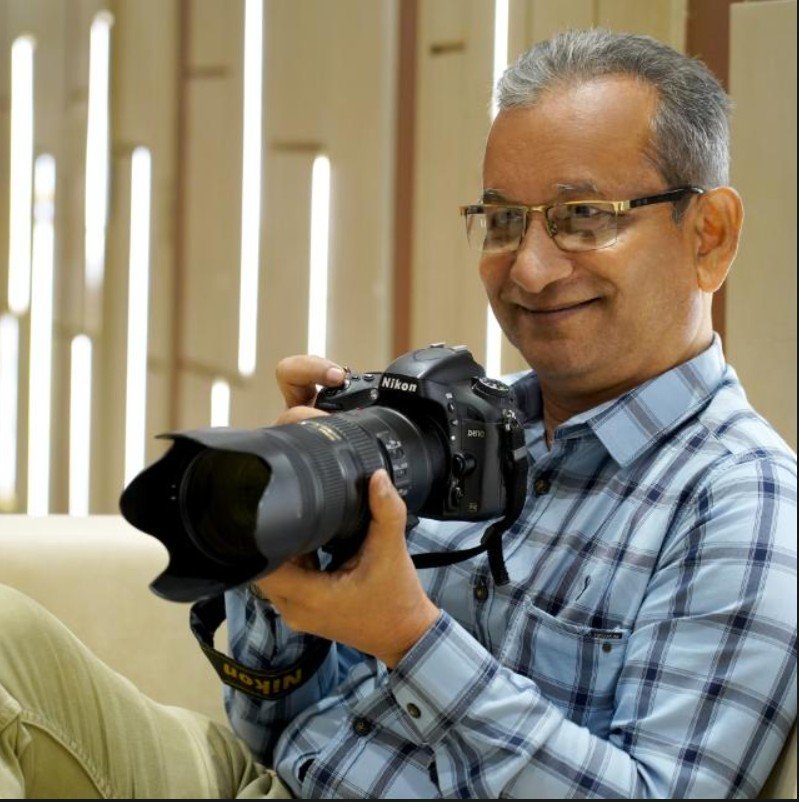
A photographer from Shankar Photo Vision holding a Nikon DSLR with a fast zoom lens
At the studio, Dombivli East

Still reading? You will get on well with us.

That is the only question worth asking first, and it takes one phone call to answer. Tell us the date and the venue, and we will tell you straight away.

Shop No. 4(A), Tushar Villa CHS, Nav Vrushali, Agarkar Road, opposite Saraswati Classes, Dombivli East 421201 · 10:00 am – 9:00 pm, every day